

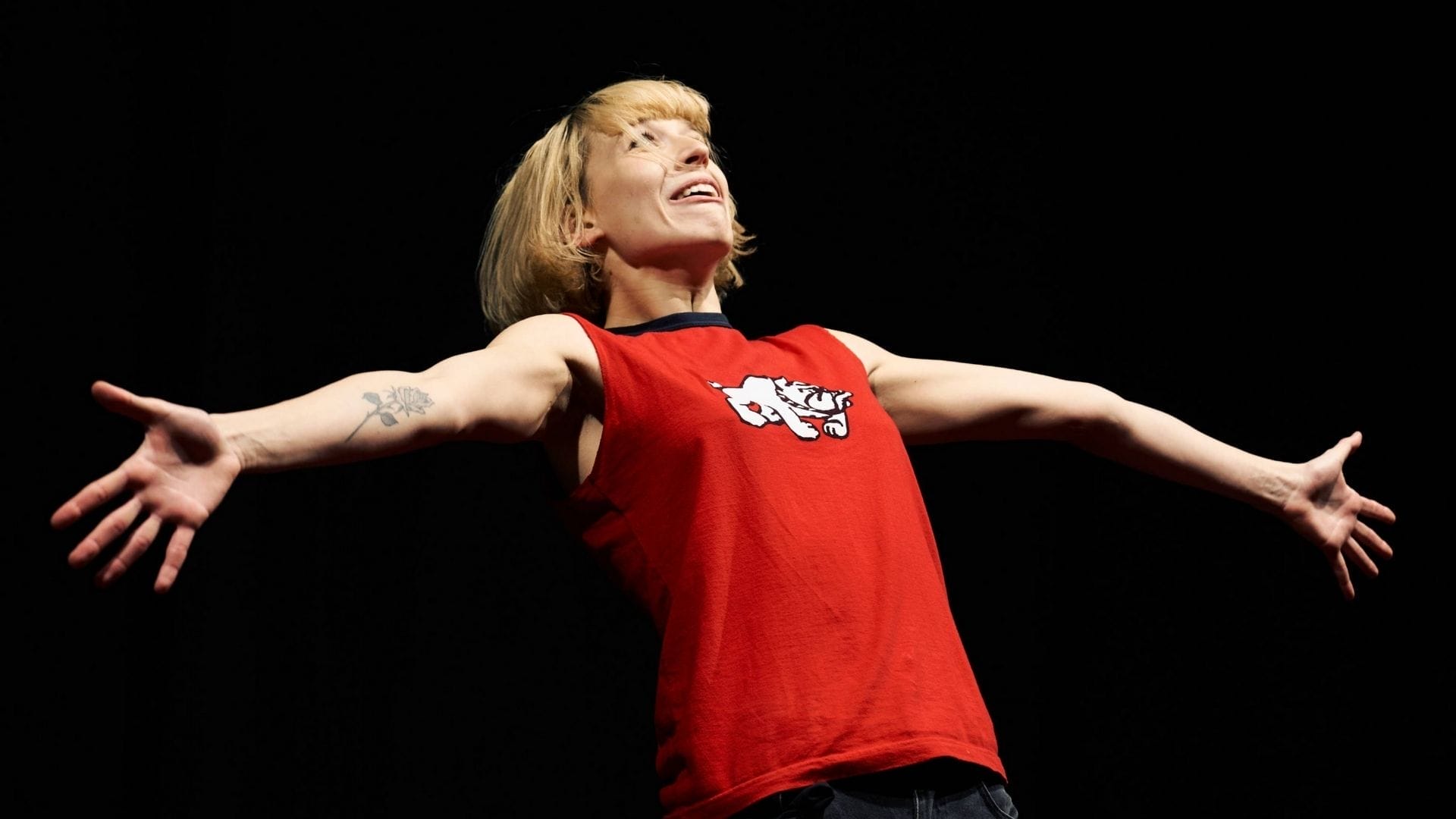
 Staged in the basement of a busy pub, John at The Glitch immediately establishes an atmosphere of intensity and exposure. Upstairs, the bar continues its usual rhythm, while downstairs a one person show demands sustained attention, emotional endurance, and proximity. Written and performed by Anna Curiel, and directed by Felicia Kaspar, John is an ambitious and confrontational solo performance that places trauma, desire, and power at its centre.
As a performer, Curiel delivers unwavering commitment and formidable stamina. For an hour, they hold the room with fierce focus, moving rapidly between monologue, physical exertion, and direct address. The performance is vocally and physically demanding, and Curiel meets these demands with precision and control. The sheer endurance required is undeniable, and the audience’s sustained attention speaks to the performer’s command of presence.
John introduces Jenny, a woman who narrates her life through a series of grotesque, darkly comic confessions. Her relationship with her dog, John, becomes a disturbing metaphor for obedience, attachment, and domination. Over the course of the piece, Jenny recounts experiences of familial trauma, failed therapeutic relationships, misogyny, and profound self-loathing. Therapy sessions are described with unsettling irony: years of talking without progress and a deep cynicism towards group therapy, where mental health is reduced to labels recited like brand names. Depression, addiction, and diagnosis are spoken of as commodities rather than pathways to care.
Midway through John, the performance relies heavily on abrupt character switching. By pulling up a hoodie, Jenny becomes an aggressively misogynistic male voice; by removing it, they return to a traumatised female subject. While this device aims to expose patriarchal violence, its execution risks reinforcing a rigid binary. Jenny is repeatedly pushed into hysteria and self-erasure, afforded little agency beyond collapse. Pain is rendered visible, but its psychological complexity remains underexplored, leaving the character trapped in a cycle of rage, denial, and self-hatred.
Audience interaction forms a recurring strategy, often taking the shape of shouted challenges and sudden intimidation. These moments generate shock and nervous laughter, yet the mode of engagement remains largely repetitive. Rather than opening space for genuine connection, the confrontational style appears to substitute provocation for dialogue, as if sustained connection itself were too risky.
You mightalso like

Despite its excesses, John ends by foregrounding spectatorship rather than catharsis, reminding us that theatre can hold difficult and shame-laden material without resolving or softening it.
More information can be found here