
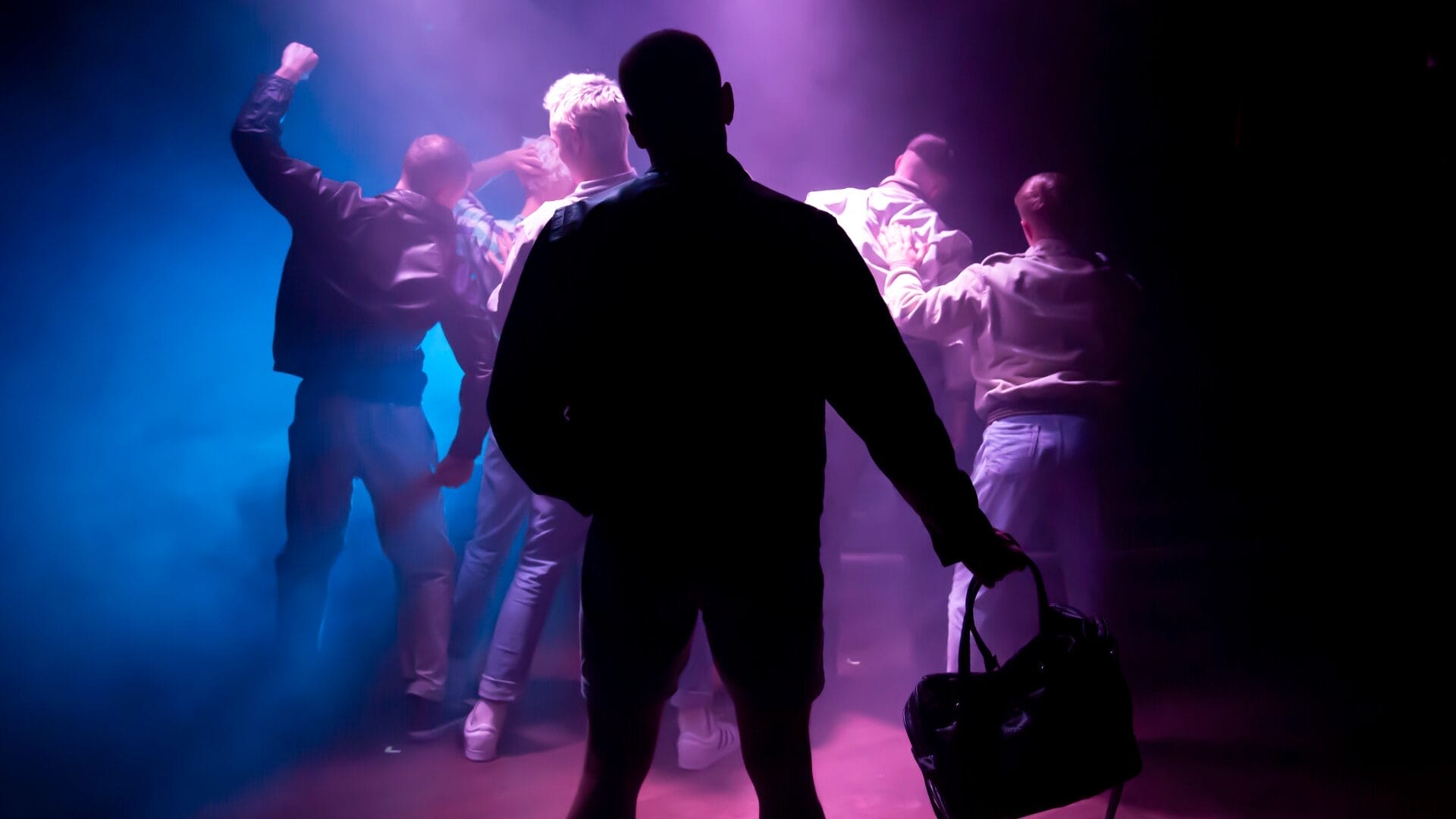
 Shaper/Caper’s Small Town Boys, part of the Made in Scotland showcase at ZOO Southside, is a glittering, gut-punching tribute to queer resilience and joy. Conceived and choreographed by Thomas Small, the production draws from his personal experiences growing up during the AIDS crisis and under the shadow of Section 28. What emerges is a vibrant, emotionally charged piece of dance theatre that celebrates the sanctuary of queer nightlife while confronting the trauma that shaped it.
Set in the late 1980s, the story follows a young man who leaves his small town in search of community and connection. He finds it in the Paradise Nightclub, a pulsing haven of music, movement and solidarity. But as the AIDS epidemic intensifies and government support remains absent, the euphoria of the dancefloor gives way to heartbreak and loss. The production doesn’t flinch from these darker moments, instead weaving them into a tapestry of resistance and remembrance.
Rather than relying on traditional narrative, Small Town Boys uses dance and physical theatre to tell its story. This approach allows for a rich blend of professional dancers and community cast members, whose presence adds authenticity and emotional depth. The audience is often swept into the action, blurring the line between spectator and participant in a way that feels both celebratory and intimate.
Design-wise, the show dazzles. A standout sequence set in a nightclub toilet, complete with moving doors and graffiti, captures the raw energy of queer spaces with inventive flair. The soundtrack, packed with iconic tracks from the era, amplifies the emotional highs and lows, anchoring the audience in the world of the Paradise Club.
While the first two-thirds of the show are propelled by infectious energy, the final section loses some momentum. The pacing falters slightly, and for those familiar with the history, the themes may feel familiar. Yet the production’s charm, creativity and heartfelt execution more than compensate.


Small Town Boys is not just a portrait of trauma, but an act of celebration. It honours the spaces where queer people found joy and survival, and reminds us that dancing can be an act of defiance.