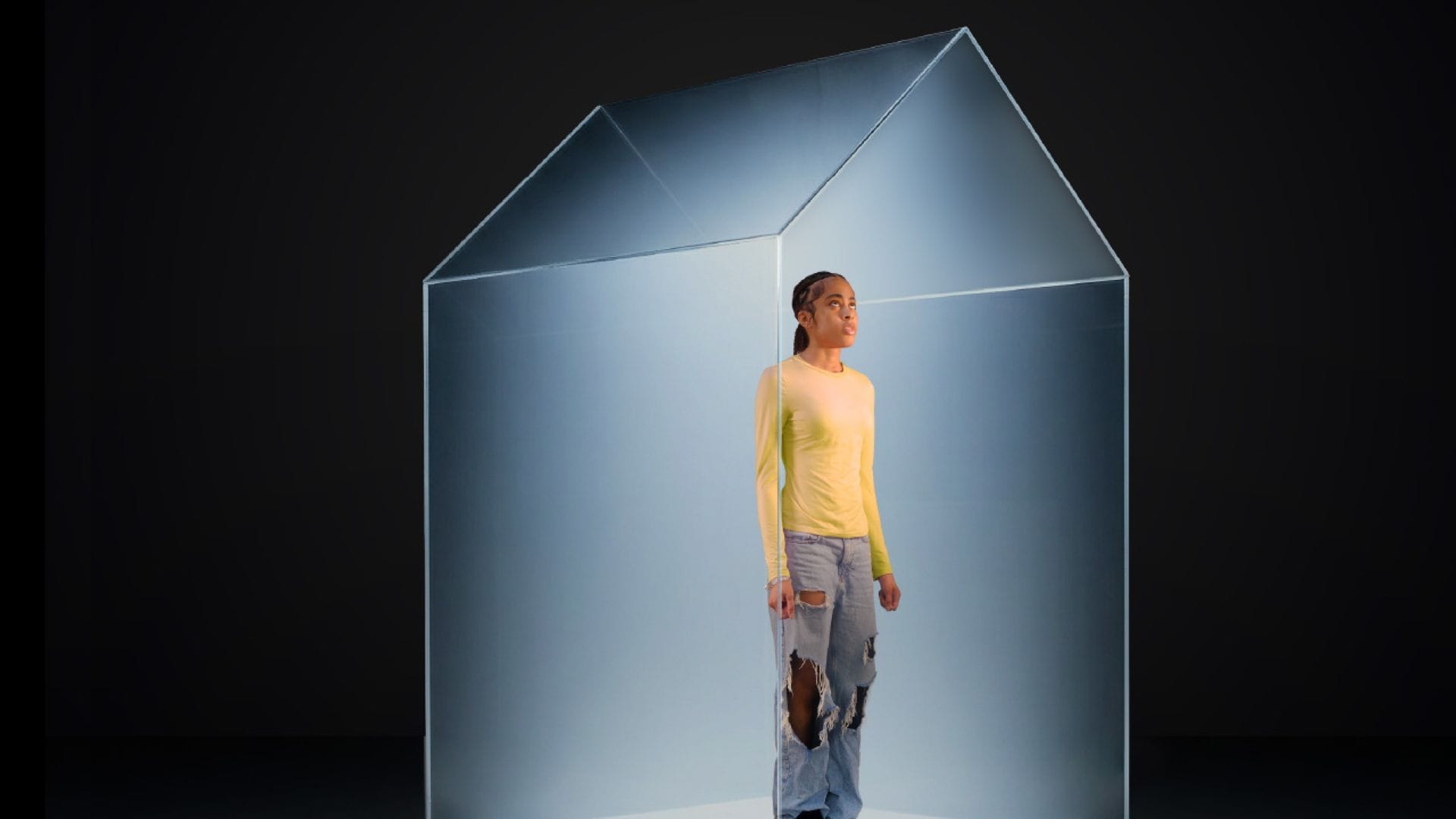


 Directed by big name and Big House Artistic Director, Maggie Norris, this piece shines a light on children living within the abusive and brutal ‘system’ of care and entrapment which A DoL House explores. And no, this isn’t a perverted rendition of Ibsen’s age-old classic. Instead this is a fresh new perspective tethered to a searing team of actors who are themselves members of The Big House institution, which provides support to people who have lived in care.
Painful, yet gorgeously didactic, A DoL House hits all the right notes at all the right times. Most of this is down to the electric performances, which are refreshing even in the scorching hot studio space which is home to this production. Most impressive is the vulnerable, objectified and misbegotten Anais Lone, who plays Leyla, the target of this play, who faces abuse from care workers and is imprisoned in the space. The dynamic is so sound between the characters due to the tension with Jason. James Atwell playing this character is trumpian, dictatorial and steel-fisted.
Then comes his foil, the mysteriously knowledgeable Jag, played by Zarif Hussain. Hussain’s nervous energy ebbs and flows, complementing Jason’s with ease and the pair work instantaneously well together. Perhaps, the performances from these two characters do come across as somewhat overly naturalistic at points but really these performances up the ante and raise the octane levels. Anais Lone, her character, between a rock and a hard place, is obdurate and fiercely confident even then.
Written by David Watson, the text is well-crafted. Given the nature of the subject matter, it would be easy for the play to come across generic or even cliché, but Watson adds complex dynamics. He throws into question who has ‘control’ in situations, and what ‘authority’ and ‘systems’ mean. Questions which are infinitely valuable in this age of systemic abuse and top-down control.
Cleverly interwoven were the nuances of the caregivers’ positions, a DoL (Deprivation of Liberty house) became a site of entrapment for these people; clearly also vulnerable and locked up in the system which they perpetuate. Woven into the piece come sections of humour to dampen some of the scenes’ aggression, which is well-styled and contained. The actors deliver all this with ease, and style; never letting a moment feel awkward or unnecessary.


Much of the heavy lifting in this production is performed by the episodic nature of the piece, projections by Mic Pool create a further distorted and disrupted landscape which allows an insight into the complex and constantly dismissed mind of Leyla, which is conveyed with similar disarray (although respectfully by Anais Lone, who at points dances about the space, looking inwardly on herself as reality merges with the distant reality which she is placed in.) In a final scene between Leyla and a caseworker, Jag, bubbles blown over the projections are ephemeral and leave the play nudging into a world of ecstasy.
The sound design complements this well, jarring and profusely brutalist as the audience are closed in on and ultimately forced to listen. Sounds of other children’s groans shatter the space, and recurring musical motifs also by Pool, add to the rhythm Leyla becomes intrinsic to the dystopian system which the caregivers leave her to.
Ultimately this is a play of recognition: recognition that children in care are more than a ‘package that pays well’, more than numbers locked up in a system, but humans who need the reality of the natural world. This is not Ibsen’s DoL House but one of similar entrapment where Maggie Norris makes Leyla dance the tarantella not as a means of performance but as a means of pride and fearful confidence.
Listings and ticket information can be found here