

 After its successful run in 2025, actress and writer Sarah Tara Ray’s debut play Our Mother’s Daughters has opened at the Hen and Chickens Theatre for a four-night run. From messy hook-ups to menopause, tender friendships to tense family ties, the play is unflinching in its ambition to show the realities of women’s lives and the threats against reproductive rights.
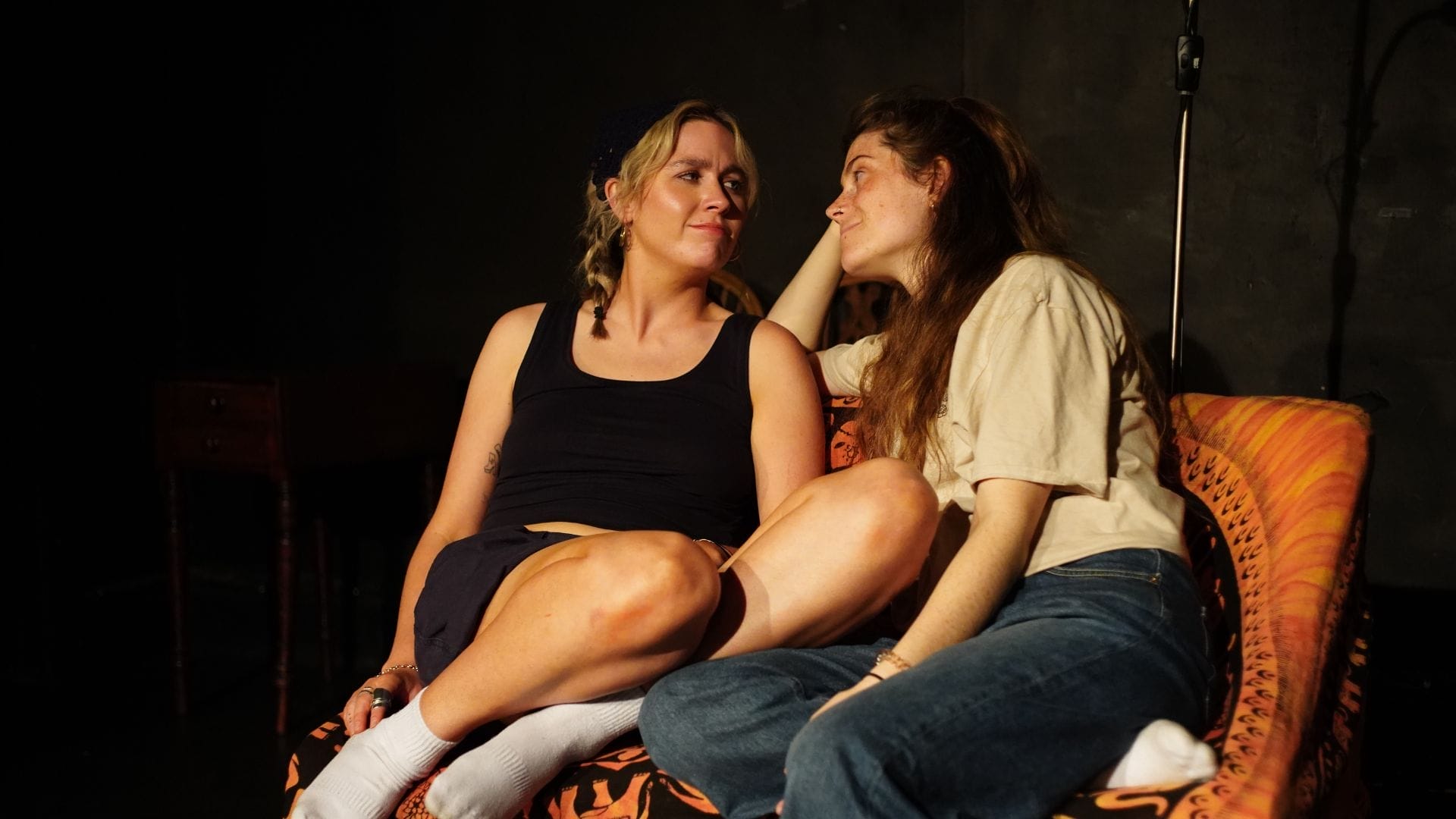
At the centre of Our Mother’s Daughters are three young women navigating their next steps after university, figuring out relationships and grappling with their place in the world. The characters seem written to be relatable to a Gen Z audience: there’s the unnamed newly-out, neurodivergent, bisexual artist fresh from a break-up, Billy the chaotic and hyperactive uni dropout and Kat the sweary, type A overachiever.
With their in-jokes and impressions, the trio certainly feel very current and familiar. For audience members of the social media generation, The Artist, Billy and Kat resemble parody archetypes from Instagram or TikTok comedy sketches, while for others, they’re straight from a sitcom. Their consistent personalities mean who they are and what they represent is clearly communicated to the audience, but it would have been interesting to see a version of Our Mother’s Daughters where the characters were more nuanced and had the chance to show some growth.
In that version of Our Mother’s Daughters, the overall message would also have more room to breathe. Ray and director Hanna Berrigan set out to spotlight women’s experiences, and there is a quiet feminist power in the way they have laced references to how reproductive health affects every character throughout the play. What is so often ignored in fictional media is brought to the forefront in Our Mother’s Daughters, reminding the audience of how reproductive health shapes the choices the characters make, the emotions they feel and their physical health in that moment.
However, it feels like Ray and Berrigan lose confidence in how evocative this is on its own and lean too far into PSA-style messaging to bolster what is already effective. This leads to scenes that were previously heartfelt depictions of relationships between women veering into less realistic dialogue that feels too long. While this is balanced in large part by the brilliant acting, especially from Natasha Mula and Andi Bickers, if the play had been tighter, their characters would have had more room to develop and be challenged. This would have given them the emotional depth necessary for the audience to fully connect with the characters, and it would have given Our Mother’s Daughters a sharper edge to deliver its message.


Listings and ticket information can be found here