
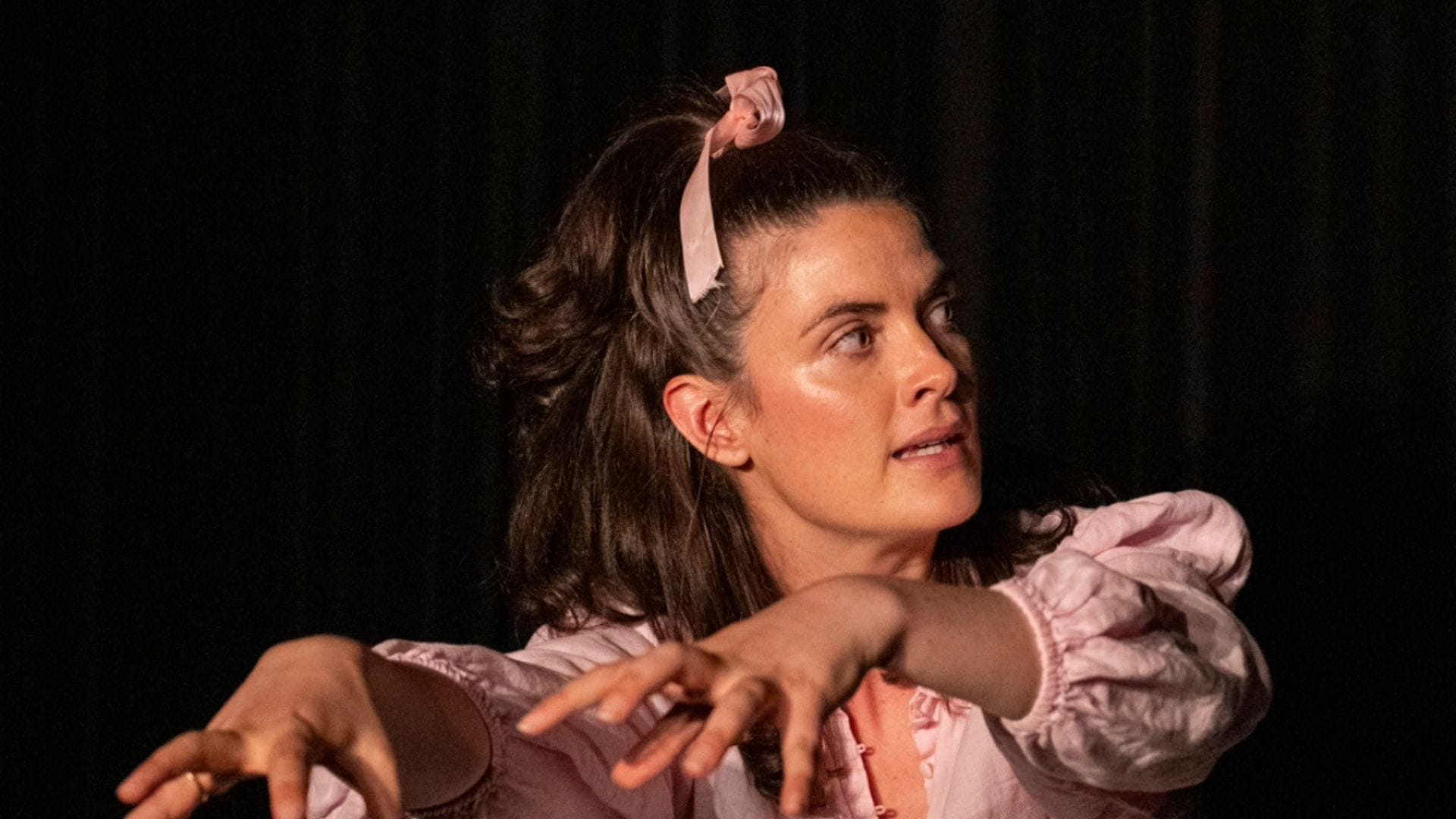
 Lost Property is a bold, one-woman show that courageously blends absurdist comedy with contemplative drama. Set aboard a Melbourne tram, Amelia Dunn’s Alice embarks on a surreal quest to “find” her vagina — which she interprets as having lost her sexual spark. The journey takes her through evening classes, therapy sessions, and a bizarre vagina-shaped mask, all leading to profound reckonings with womanhood, guilt, and bystander responsibility.
Since its debut in Melbourne in 2024 and a warmly received season at Adelaide Fringe earlier this year, audiences across continents have connected with its themes, sometimes in unexpected ways, highlighting the universality of its exploration of loss and the strength that can emerge from solidarity.
Dunn is exuberantly energetic; her characterisations are sharp, and her comedic flair is vivid. The props, especially the vagina cosplay, deliver laughs while underlining the absurdist tone.
The show’s themes tackle serious weight, but they don’t always hit the mark. Alice’s lingering guilt over not preventing an assault seesaws amid gags that can sometimes fall flat or feel mismatched in tone. The pre-show trigger warnings signal these themes, yet swings into frothy comedy — think fart jokes and flamboyant façades — underscore a tonal dissonance. The darker hints are sadly a little overshadowed by the zaniness and not quite given enough emotional gravity. I commend what they’re trying to do here, but it just didn’t quite land for me.
Still, there’s much to admire about the show. The premise is striking, and the show’s heart lies in the thought-provoking question: what do women owe one another? Dunn’s performance bristles with warmth and conviction, and the show, while quirky, resonates with deeper undercurrents — if only it leaned into them more.


In short, Lost Property is inventive and at times delightfully absurd. If you’re drawn to boundary-pushing solo theatre that ventures into absurdity to reveal deeper truths, this could be worth your Fringe time. However, if you prefer more grounded storytelling or a more even tone throughout, the rapid shifts between slapstick moments and emotionally weighty themes may feel jarring or under resolved.