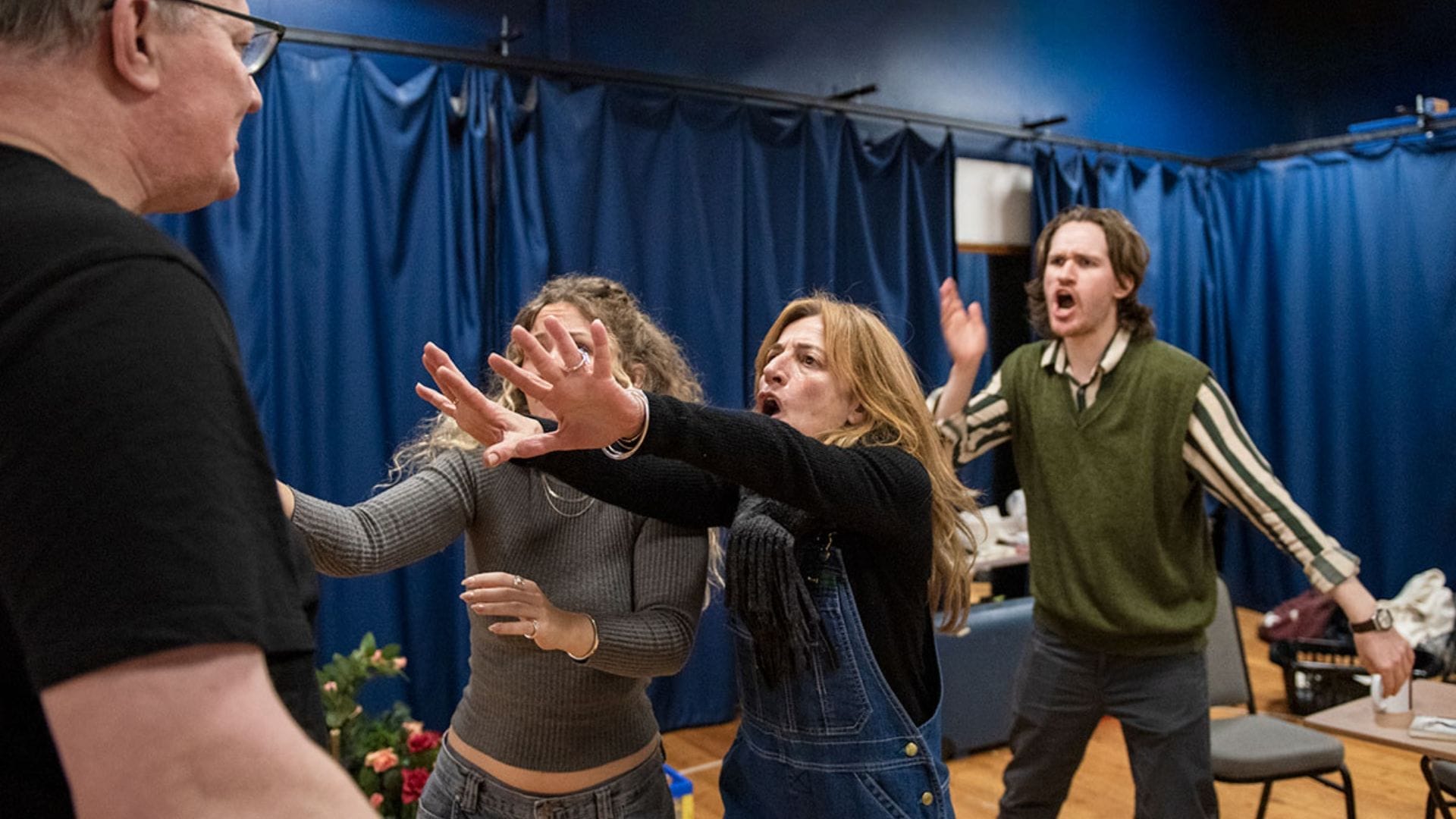



Dante or Die’s acclaimed immersive hit I Do returns for a brand-new tour, opening at Malmaison London as part of Barbican’s Scene Change season. Directed by Daphna Attias, this unique production invites audiences into six hotel rooms on the brink of a wedding, where secrets and emotions collide.
Known for its intimate, site-specific storytelling, I Do offers a cinematic theatrical experience that explores love, fear, and family dynamics in real time. Audiences move between rooms, piecing together a tangled narrative of relationships and revelations.
Performances run from 20 January to 8 February 2026 at Malmaison London. Book tickets here.
You’re directing I Do at Malmaison London as part of Barbican’s Scene Change season, what can you tell us about the show?
I Do is a site-specific theatre show that unfolds in six rooms of a working hotel. As the final ten minutes before a wedding loom, audiences are invited to move through six different rooms, each revealing overlapping, intimate slices of family dynamics, nerves, secrets, connections and humour.
Audiences will be piecing together a jigsaw puzzle, each room offering a different perspective on the same tense moment in time — the final ten minutes before a wedding. It is intimate, funny and moving.

I Do is described as an immersive experience set in a hotel, what inspired this concept and setting?
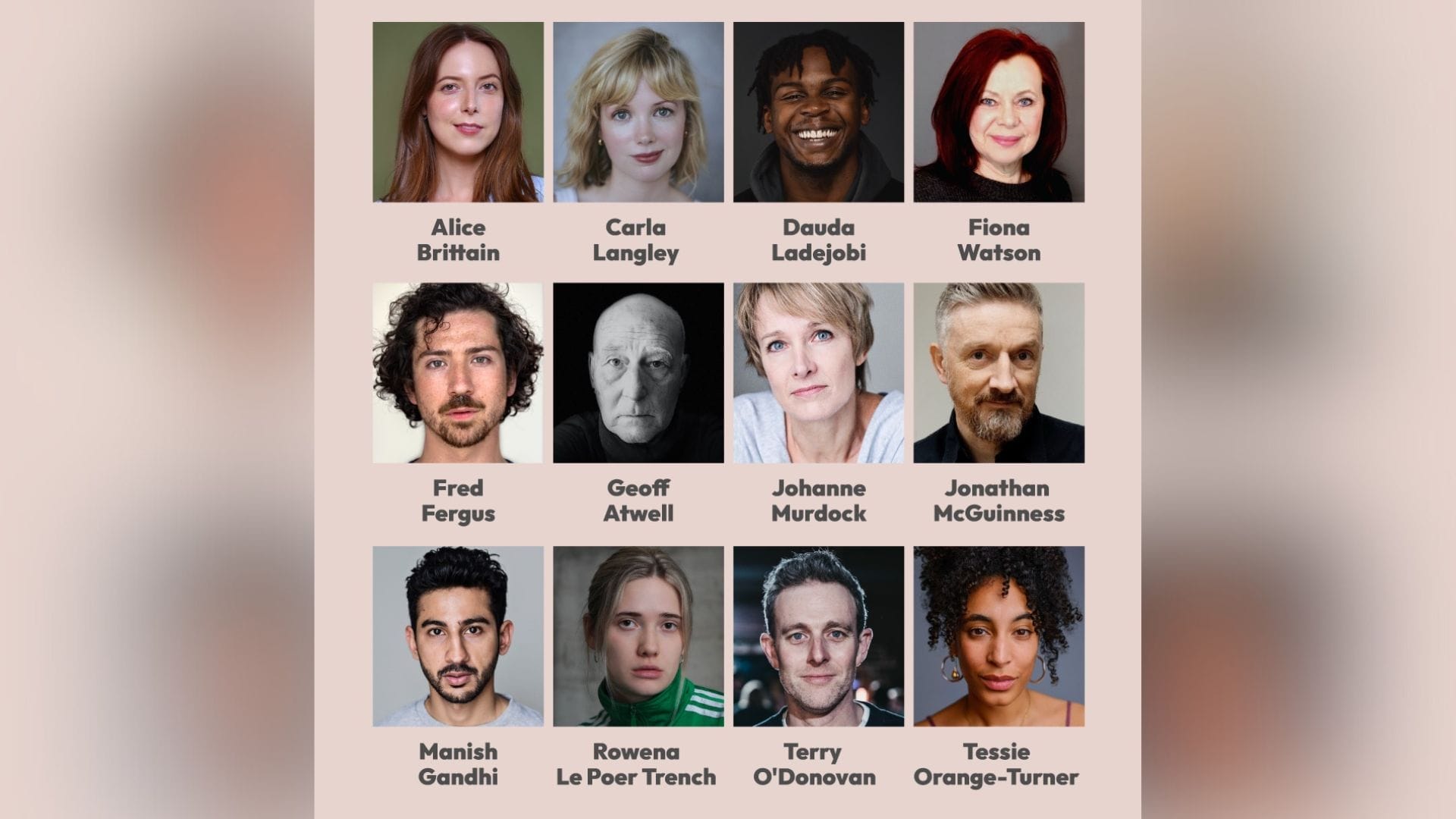
The hotel setting allows us to lean into intimacy, creating a fly-on-the-wall experience for audiences who get to be very close to the action. Terry O’Donovan and I created the original production 13 years ago with writer Chloë Moss, at a time in our lives when weddings were very present. All our friends were getting married, and we were asking ourselves: why do people do it? What does it mean for people? How does it evolve with time?
We are looking at weddings and marriage from lots of different perspectives in the show and have characters from the age of 8 to 80. Weddings are full of emotional pressure points — excitement, fear, laughter, tension — and placing audiences inside authentic hotel rooms puts them in those moments rather than watching them from afar. That blur enhances the emotional impact and makes the story feel immediate and personal.
How does working in real hotel rooms influence the way you approach directing compared to a traditional theatre space?
Directing in real hotel rooms means the audience isn’t seated in a fixed perspective — they’re within the world of the story. That changes everything: how movement is choreographed, how actors interact with audiences, how sound travels, and how details are layered into the environment.
There’s a logistical complexity; we often joke and say this show is “logistical theatre.” We need to get all the audiences up at the same time. All the scenes start and end in parallel, so the show is essentially run by the cast. At the same time, they need to be 100% in the moment, aware of where everyone else is (a lot of phone calls, knocks on doors and voices from the corridor!) and the audience’s behaviour is also not always predictable.
So the cast needs to have a lot of flexibility and ability to respond in the moment. The audience’s movement in the space and between the rooms is just as choreographed as the performers’ tracks.
The show explores love, secrets, and family dynamics, what themes resonate most strongly for you in this production?
At its heart, I Do is about connection and vulnerability. Weddings are a microcosm of that — intense emotion, conflicting expectations, hidden histories colliding in one place and time.
What interests me most is how personal narratives intersect: how what we intend and what we feel can be very different, especially under pressure, and how those discrepancies shape relationships in unpredictable, sometimes beautiful, sometimes messy ways.
Dante or Die has a reputation for intimate, site-specific work, how does I Do fit into the company’s evolution and your own creative journey?
I Do sits at the core of what Dante or Die has always loved doing: telling human stories in unexpected places with intimacy and immediacy. It’s been part of our journey since its premiere at the Almeida Festival in 2013, and over time it’s taught us so much about audience movement, choreography of space, and emotional proximity.
For me personally, it’s a reminder why we started making theatre this way in the first place, and how powerful everyday spaces can be when we let them carry the story. It has also been a fascinating process to come back to the show. The world has changed a lot since 2013, so we’ve been busy with writer Chloë Moss rewriting and making sure the piece reflects the world in 2026 — and us, with a bit more life experience.
What would you say to anyone thinking of booking to see I Do?
Come ready to be up close and curious. This isn’t theatre where you sit and watch — you are very close to the action. Every glance, every whisper, every room adds a piece to the bigger picture.
You’ll see familiar emotions in unfamiliar ways. Every audience member connects with a different character or storyline.