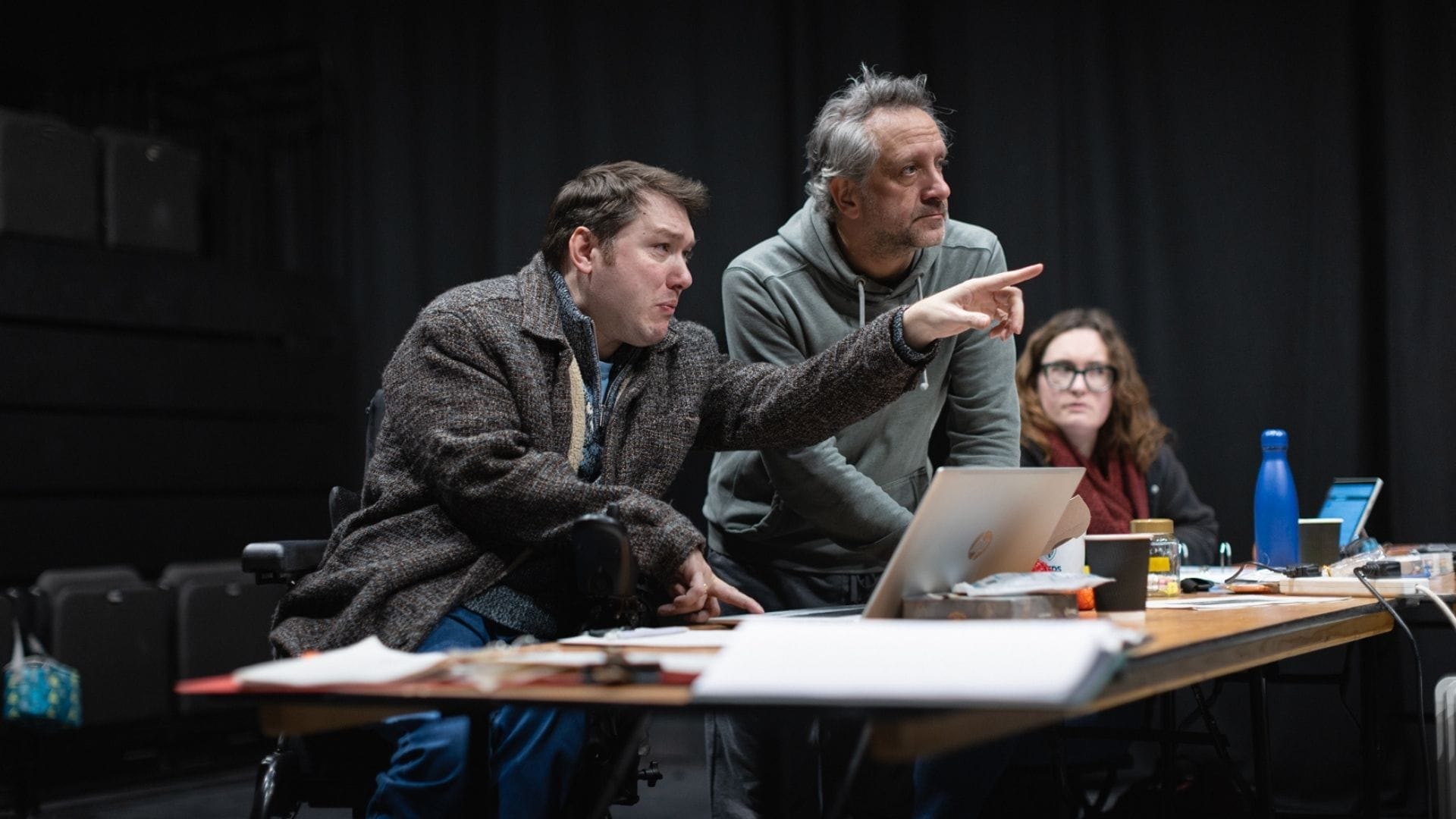


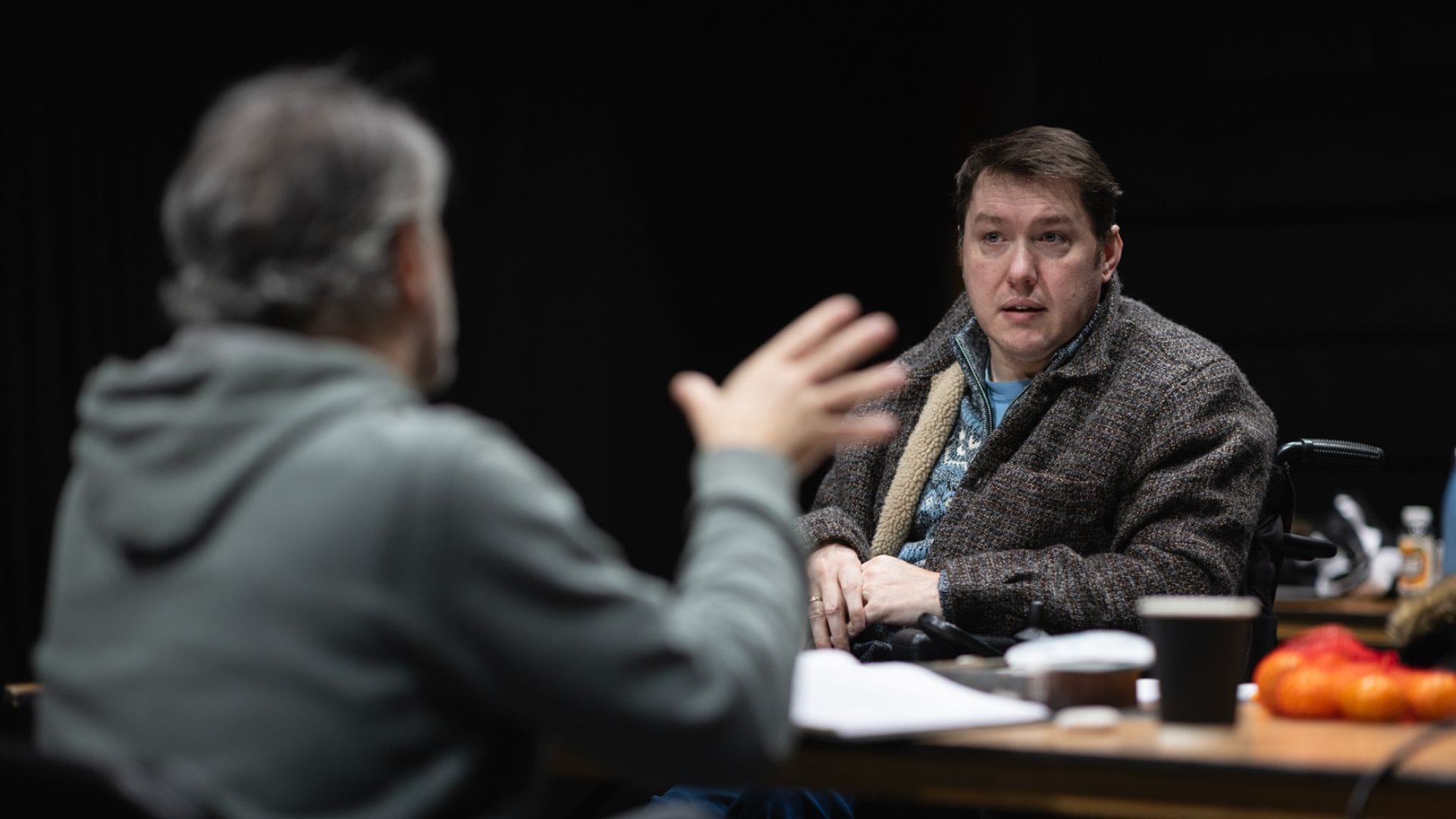
John R. Wilkinson directs the world premiere of Catherine Dyson’s The Last Picture, opening at York Theatre Royal before touring across the UK. The production offers an inventive and emotionally rich look at empathy, imagination, and shared memory.
Told through the perspective of an emotional support dog guiding a group of students, the play blends theatricality with history to create a deeply immersive audience experience. Wilkinson leads a creative team bringing this ambitious concept to life.
The Last Picture runs from 5 February to 14 February 2026, beginning at York Theatre Royal before visiting Manchester, Bristol and Guildford. Tickets are available here
You’re directing The Last Picture at York Theatre Royal. What can you tell us about the show?
The Last Picture is a truly unique piece of theatre: a co-authored experience shared between performer and audience. It’s tempting to compare it to the work of artists like Tim Crouch or Chris Thorpe, but the impulse behind this piece, and the impact it strives for, is entirely its own.
The play invites you to imagine yourself in multiple moments at once: sitting in a theatre in 2026, becoming a Year 9 student on a school trip, and then a citizen of Europe in 1939 as the world turns towards its darkest chapter.


Through it all, Sam, an emotional support dog, is by your side. Sam is there to guide you, to look after you, and to keep everyone safe as we traverse difficult terrain together.
At its heart, the play is about empathy: how powerful it can be, where its limits lie, and what it asks of us individually and collectively. It’s about our shared past and present, and the choices that shape our future
What first drew you to Catherine Dyson’s script, and what excited you most about bringing this story to the stage?
I first encountered the script while directing a reading for the Royal Shakespeare Company’s 37 Plays Project at York Theatre Royal, where Catherine’s play was selected as one of the winners.
From the weave of the piece, the precision of its rhythm and pacing, it was immediately clear why it stood out. Catherine and I connected straight away. We share a love of the abstract and a belief that theatre need not be confined to literal realism.
Catherine pushes against the boundaries of what theatre “should” be, inviting an elasticity of imagination and a beautifully calibrated drift, a kind of active somnolence, that sits right in my artistic wheelhouse.
This play asks audiences to exercise imagination, not passively but actively, collaboratively. And that, to me, is thrilling.
The play asks audiences to use their imagination as Sam guides them through history. How did you approach shaping that immersive experience?
The piece compels the audience to visualise the world for themselves. Catherine gives us very few stage directions, but one instruction is clear: the pictures must never be shown literally on stage.
This means the work hinges on a delicate form of collective imagination that is almost ritualistic. We’re not presenting images; we’re summoning them through language, presence, and atmosphere.
A degree of hypnosis is involved, or perhaps “channelling” is a better word. How little can we offer while still igniting the mind’s eye? How much can we trust the audience to meet us halfway?
This approach draws on ritual, on the power of suggestion, and on intuitive seeing, the kind of understanding that arises not because something is shown but because it is deeply felt.
You’re working with Robin Simpson in the role of Sam. What has the collaboration process been like as you explore this unique character together?
This play demands a storyteller with remarkable liveness and dynamism, balanced with real gentleness. Robin embodies all of that and more.
He is an immensely respected and experienced performer, and from our first conversation it was clear we were completely aligned on how the piece should work.
As a not-quite-so-young-anymore director, it’s been a joy to collaborate with someone so generous, open, and creatively adventurous. Despite the difficult subject matter at the heart of the play, our rehearsal room was warm.
Robin’s presence has been central to that. He’s brought deep care to Sam and to the process.
The creative team includes specialists across movement, sound, and lighting. How have these elements helped you build the world of the production?
I feel incredibly fortunate to be surrounded by such a stunning creative team. Their commitment, imagination, and sensitivity shape every moment of the piece.
This show relies heavily on light and sound. They are not decorative but foundational, functioning almost as parallel narrators. Movement, too, plays a quiet but crucial role in guiding the audience’s emotional journey.
Each discipline offers a way of listening, of holding space, and of expanding the play’s imaginative reach. Together, they form the invisible architecture that helps the audience look closely, think freely, and feel bravely.
I couldn’t ask for a better group of collaborators.
What would you say to anyone thinking of booking to see The Last Picture?
Come with openness. The play invites you to consider empathy and the choices we make, individually and collectively.
Each audience member will take something different from the experience. You’ll also be witnessing a new work from an exceptional emerging voice.
Catherine Dyson’s writing is powerful, distinctive, and deeply humane. I’d love people to come and discover her voice.