

 The concept of a ‘panacea’, a cure to all earthly diseases, has probably always been appealing. But there is no doubt it has an even greater allure with a global pandemic so close in the rear‑view mirror. It is easy to believe that if medical science were able to turn this myth into reality, as Professor Gus Jamieson is trying to do in Panacea at Riverside Studios, ethics might quickly fall away. It is the murky idea of scientific morality that is explored in this likeable but uneven play from directors Christina James and Freya Griffiths.
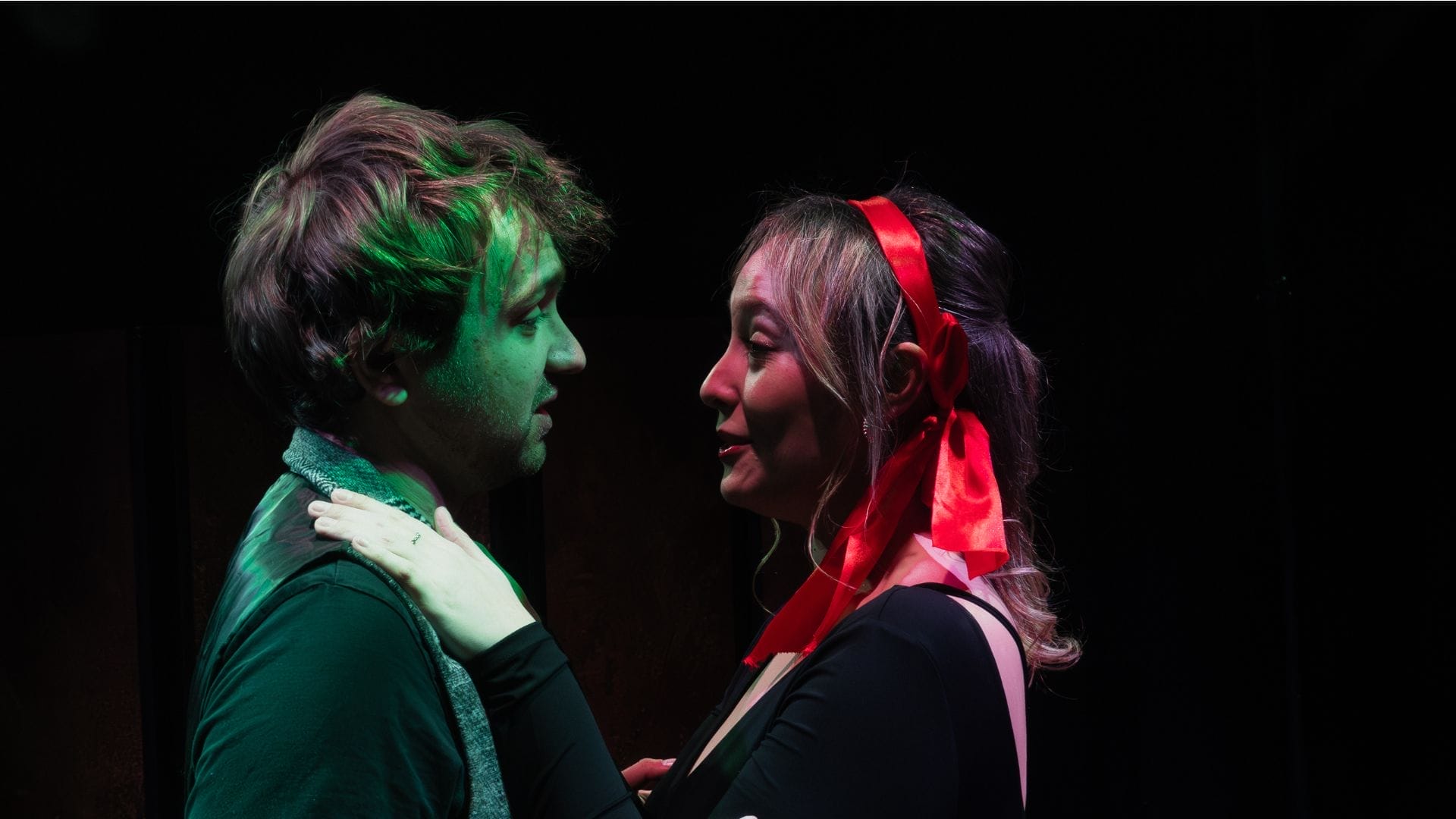
Professor Jamieson is a brilliant research scientist who has dedicated his life’s work to developing the eponymous Panacea, which he envisions as a kind of infectious vaccine. He appears to be on the cusp of success when two women enter his life and alter its course entirely. The clever and warm Julia is Gus’s ideal partner, and romance soon blossoms, shaped in part by his neurodivergent traits. Sophia, meanwhile, is sharp and driven, an admirer of “Professor J” who argues her way into his lab. Her ambition and her family connections offer Gus the opportunity to accelerate the project, although there is a cost attached.
Panacea was co-written by director James and Andrew Singer, and they do a strong job of making Gus a likeable and authentic protagonist. His romantic fumbles are linked to his ASD (autism spectrum disorder), but they will be relatable to anyone who has found themselves slightly overwhelmed by new love. He is played with sincerity by lead Will Batty, supported by a capable ensemble cast who bring clarity and heart to the story.
James and Singer raise engaging questions about the ethics of science, which is where Panacea is at its strongest. This is perhaps unsurprising, given Singer is himself a research scientist. Gus’s colleagues express opposing but equally compelling viewpoints, weighing the frightening risks against the potential value of a true cure‑all.
While the underlying themes are compelling, the narrative itself is a little weaker. Although the twin storylines of Gus’s romance and the success of the project are engaging, some plot points do not quite land. The reason for Gus and Julia’s major conflict feels like a stretch and is repeated unnecessarily. A small detail mentioned casually midway through the story becomes catastrophically significant at the end, and the resulting escalation of stakes does not feel fully earned by what precedes it.


Most puzzling of all is Panacea’s unusual framing device, which sees the four supporting performers reappear periodically as a kind of Greek chorus, speaking in verse. It is not particularly effective and feels out of step with the tone of the rest of the play. It is a neat way of summing up Panacea. A handful of weaker elements detract from an otherwise interesting play that presents a strong concept and explores some thought‑provoking ideas.
Listings and ticket information can be found here