
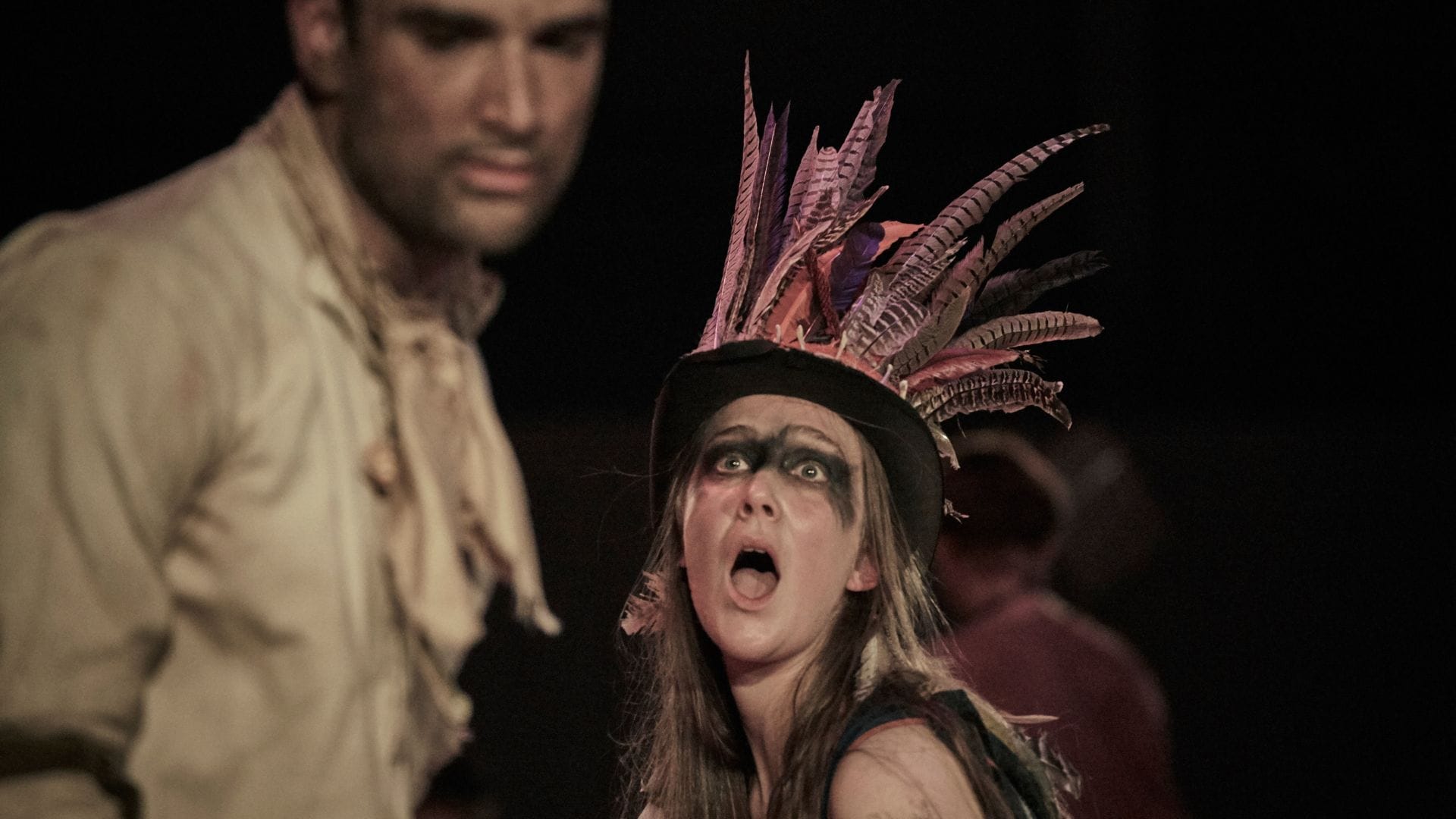
 The Contemporary Ritual Theater has brought SALT to London to finish its UK tour. The CRT’s semi‑immersive approach puts the relationship between audience and actor at the heart of their projects.
The troubled fisherman Man Billy wants to leave his village but is kept there by his domineering mother. The travelling witch Sheldis comes to town and puts him under a spell, threatening the fragile equilibrium of the village. Music is interwoven throughout this ethereal dreamscape of a play. Expect folktales, sea shanties, incest and infanticide. At its best it held similarities to McDonagh’s Beauty Queen of Leenane, Synge’s Playboy of the Western World, or Butterworth’s Jerusalem.
The SALT actors do well generally, pulling you into life with the “edge of the village folk”. The characters feel authentic, Man Billy telling the audience the provenance of his name being one of many such examples.
Emily Outred, the biggest name in the thespian triumvirate, was excellent, and shone as the domineering matriarch Widow Pruddock. Mylo McDonald, the leading man, was on the whole good, although he seemed to be doing an impression of Éanna Hardwicke’s Christy Mahon from the National Theatre’s recent Playboy. Imitation rarely works well.
Bess Roche’s accent strayed from Norfolk into some sort of imagined Irish regional dialect. The character is a travelling woman, so a mixed accent is more than plausible, but it was at times more Pirates of the Caribbean than traveller. She was excellent otherwise.
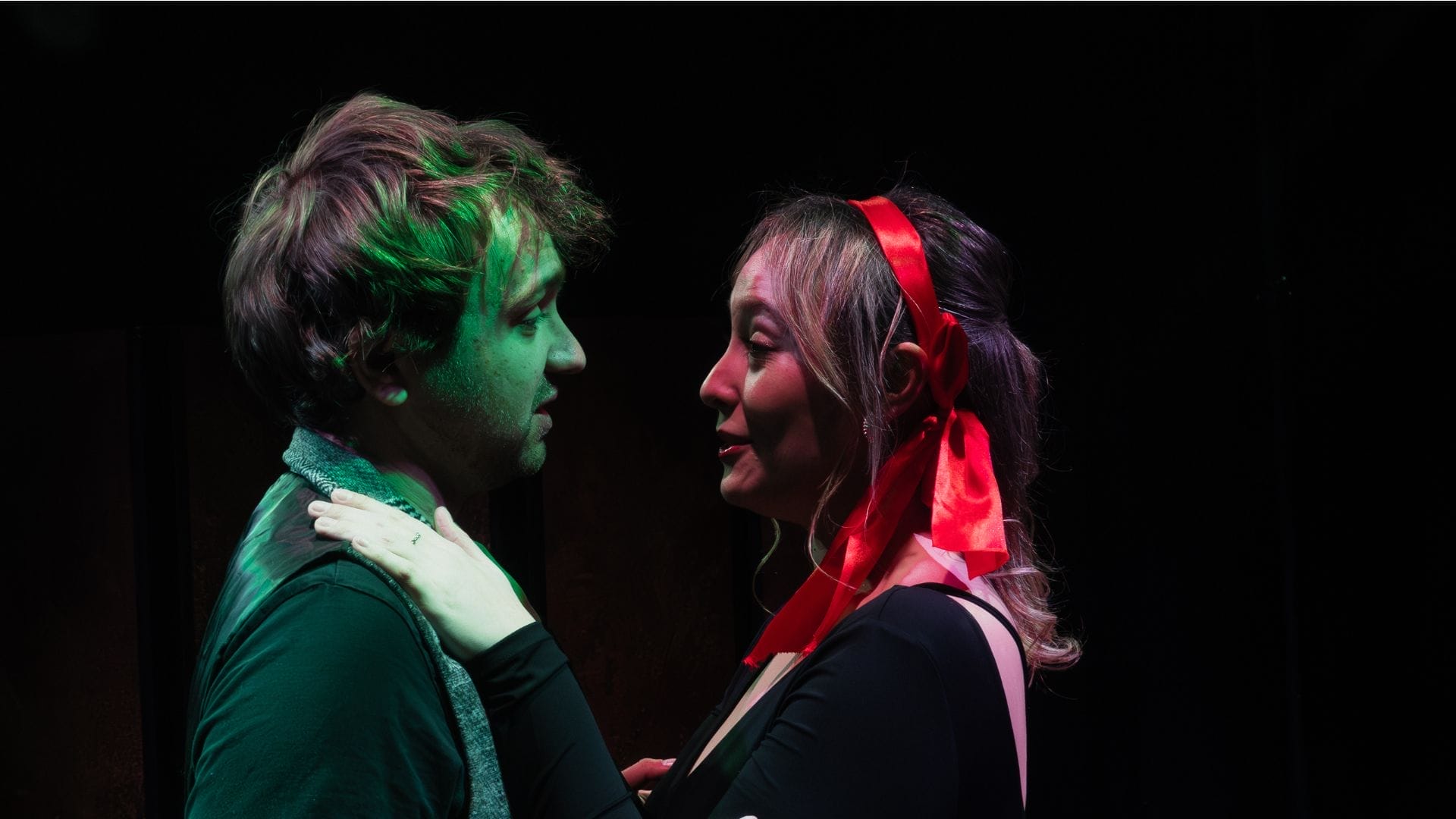

A thick rope marked the circumference of the in‑the‑round setting. Generally only two actors were involved in a scene at any one time, with the third in the background. When it worked it felt like the whole village was present on stage, the souls of the characters moving through the actors with ease.
However, the production worked best when the actors were settled firmly in their main roles, rather than attempting to play multiple characters at once. A flaw of SALT is the dogmatic insistence on minimalism: only three actors, no music, few props. The lack of instruments feels bizarre in a play where music is so intrinsic. One can only assume the spartan nature of the production is due to a regrettable lack of funding.
The writing is nothing short of exceptional. Hopkins is a published poet, which is no surprise. The dialogue, the story, the lyrical waves that crash over the audience for two hours are reminiscent of Thomas’ Under Milk Wood or Beckett’s Godot. The latter was staged at Riverside Studios by Beckett himself, and it is fitting Hopkins should take up the mantle of the Nobel laureate in the same space. Innovation and experimentation drive contemporary theatre forward, and breaking new boundaries should never be criticised.
SALT is impressive and intelligent, more than it is enjoyable. The play has undergone many edits and alterations since first being staged, but there is still a way to go. Hopkins’ writing is superb, and the play has some excellent elements, but it is not there yet.
Listings and ticket information can eb found here