


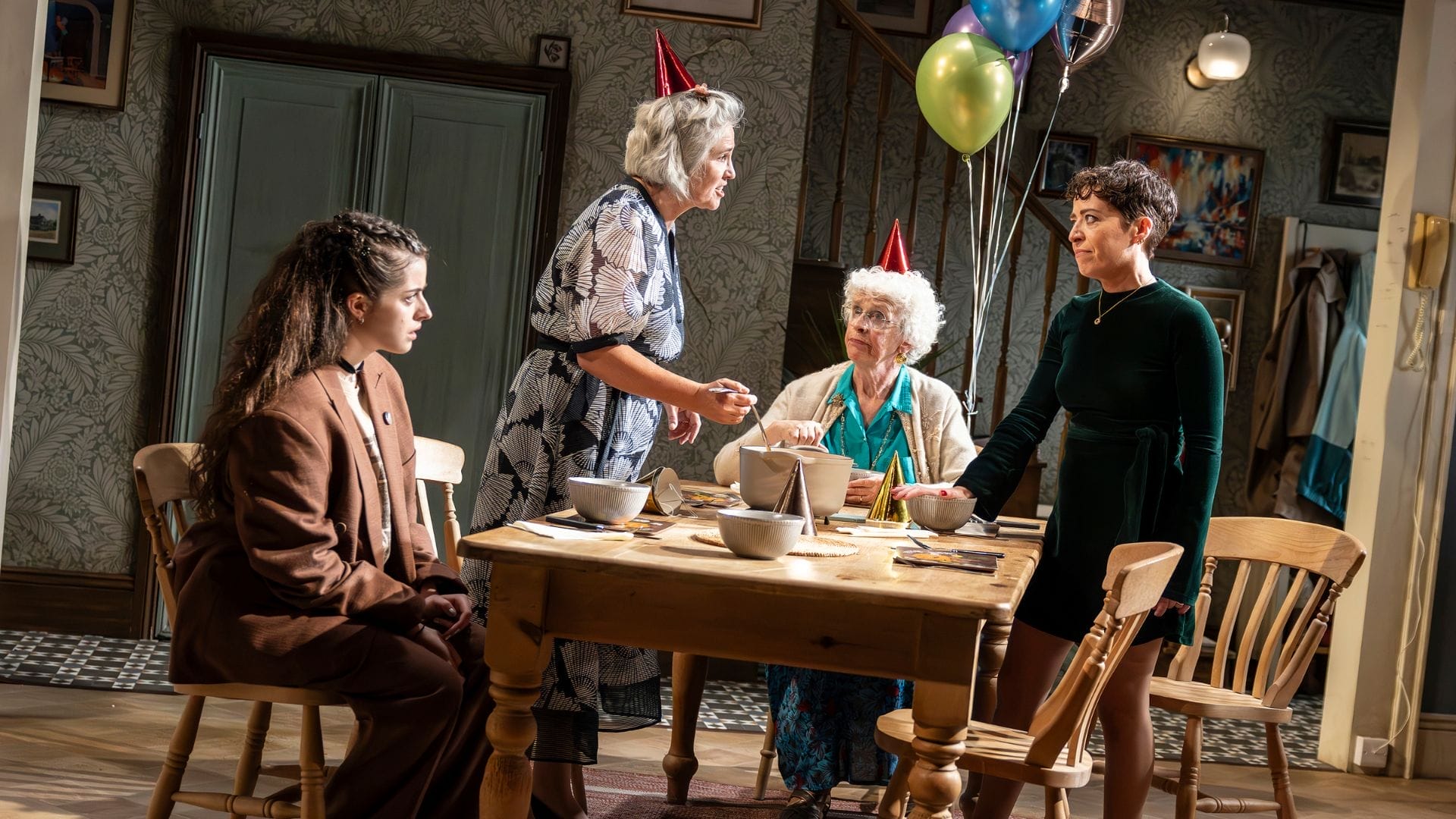
 Consumed is a gripping drama that explores the complexities of intergenerational family dynamics. Connecting each of the characters is greed—a hunger for something of which they are seemingly unaware—and each suffers for this hunger. The family members reunite for the birthday party of great-grandma Eileen (Julia Dearden), which provokes the reconvening of four generations. Each woman brings stories—from tales of desperate stockpiling to modern newspaper headlines about climate change. And truly, the issue for this family is the burying of truths and the avoidance of key discussions. Each family member pushes away someone in their lives, except the youngest, important and hopeful soul in this play: Muireann (Muireann Ní Fhaogáin). Consumed is always in past tense in title—the family buries their hunger, but Muireann is the powerful, future-thinking figure in this family drama.
Paines Plough have delivered again with this production, combining Katie Posner’s quality direction with a unique and wide-ranging script that is beautifully reminiscent and posed with intensity, yet also endearing humour. Posner’s direction is skilful and smooth, and the complex living room set is utilised artfully—not a single piece neglected or ignored. The movement of furniture perfectly encapsulates the separation among the family members at the end of this thriller.
Performances are stellar from this mature and well-bonded cast, each fostering naturalism and adding such intensity to their roles. Most credit has to go to Caoimhe Farren, who played Gilly. Her heart-wrenching performance was both moving and deeply disturbing as an audience member nestled in the seats of The Traverse Theatre. Likewise, Julia Dearden manipulates the comedic moments with skill; laughter turns to tears, and the audience are turned topsy-turvy by this comedic family drama. The way the set is manipulated by the action is invigorating. Lights flash, kettles boil, microwaves purr under the strain which the family puts on each other, and ultimately the repression of their emotional states is expressed and unleashed by the furniture around them. The house suffers and reacts to their hunger and their greed.
Consumed is heated. It holds high stakes throughout, and when the play nears its conclusion, the walls lose their plaster and instead adopt a skeletal form. It is comedic yet also crushing to watch as an audience member. Personally, I felt that from the outset the family could soften a little. While the comedy provides necessary respite from the drama, lines are delivered harshly and defensively, which means that later the play becomes less authentic and the situation only somewhat believable. The discussion of such a broad range of well-known current affairs topics blended with old-fashioned perspectives made this a well-framed production applicable to all. Sometimes modern additions were overstressed, I did feel, and the youngest female character delivered too many of these references, which left it feeling a tad cliché. But not cliché was the finale—the closure of this play—which ultimately left, ironically, no closure or completeness, which discomforted the audience.
The central pillar of consumption and greed is a unique one. Read through the lens of eating disorders to explore Muireann’s lack of consumption in the other women’s soul-absorbing fantasy, the mealtime creates pain and over-consumption (of media opinions, alcohol and all things luxuriant). The walls in which the women are trapped become a place of greed and terror, laced with humour and brief joy. And this balance is perfect. Luxuriant and relatable. I clung to every word. I am hungry for more from the team at Paines Plough and director Katie Posner.