

 “I’m not Caliban. I’m Prospero,” says Beethoven in Beethoven I Shall Hear in Heaven, a music-play written and directed by Tama Matheson, with musical direction by Jayson Gillham. Composed in 1801–1802, Beethoven’s Piano Sonata No. 17 is nicknamed the “Tempest” Sonata, a title inspired by his student Anton Schindler’s claim that Beethoven once told him to read Shakespeare’s The Tempest.
But if we were to write a play about Beethoven, what could we write about him? His transformation of music from the servant of aristocracy into a profession of its own? The storm of Enlightenment thought that struck and shaped him? His confrontation with, and transcendence of, deafness? Last but not least: what is the true meaning of art, and how does it relate to God, or to one’s own soul?
Whatever the perspective, Matheson is remarkably sharp to grasp that “Caliban vs. Prospero” tension residing inside Beethoven himself. If the play had developed around this core controversy and explored it in depth, it could have borne the potential to become a masterpiece no inferior to Peter Shaffer’s Amadeus.
Unfortunately, rather than examining Beethoven’s inner world deeply, Beethoven I Shall Hear in Heaven presents a simple chronological biography. Scenes are typically introduced by a narrator, followed by a brief acted vignette, accompanied by Beethoven’s music. These vignettes touch on many of the most famous episodes from his life, including his troubled relationship with his father, his growing deafness, his disillusionment with Napoleon Bonaparte, the custody battle, as well as his romantic relationships.
However, these life stories neither serve a more profound storytelling purpose nor engage the audience with something universally emotional or critical. For example, the depiction of childhood misery seems of no use in shaping Beethoven’s character, and instead attempts to suggest a link to his deafness through repeated scenes of physical abuse from his father. In other moments, Beethoven suddenly launches into philosophical reflections on the essence of music. These monologues feel more like a mouthpiece for the author, engaging in a cross-temporal debate with Wagner. At times, it evokes the feeling of a Beethoven manga I read years ago—now performed live with music.

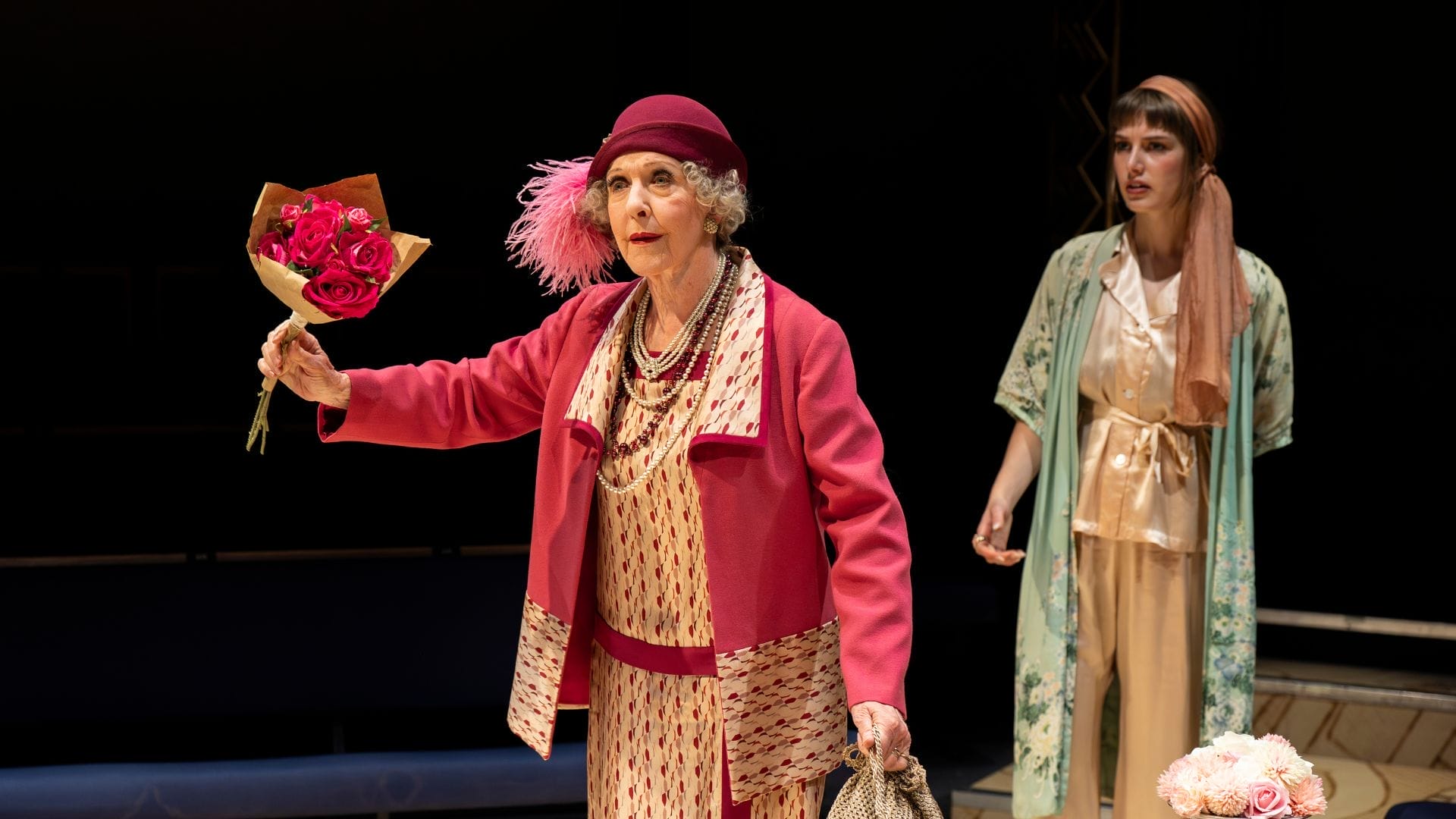
The play also stumbles structurally. After Beethoven parts ways with his lover, the quartet plays the Piano Sonata No. 14 (“Moonlight” Sonata) while the rest of the stage remains silent. This is a moment of both emotional arc and unresolved dramatic tension—a perfect moment before the interval. But it is immediately followed by Beethoven’s sudden epiphany about his deafness: he decides to construct an entirely new musical world in his mind, without any internal reckoning or resolution arc.
The three actors (Tama Matheson, Robert Maskell and Suzy Kohane) play multiple roles, with Kohane having the script in hand. Aside from Matheson, who plays Beethoven exclusively, the other two seldom distinguish between their roles through acting, and their characters often blur together. The OHP Singing Ensemble is underused, appearing only briefly in the second half and during Symphony No. 9. While the first half highlights some of Beethoven’s lesser-known chamber works (beautifully performed by Quartet Concrète), it remains unclear in the second half whether a small string ensemble can fully embody the grandeur and scale of his symphonic writing.
Listings and ticket information can be found here