

 Nayatt School was first produced by the Wooster Group in 1978, then again in 1982, and now the company brings it back as a redux. While the production retains its innovative spirit, showcases meticulously curated stagecraft, and demonstrates a clear connection to its roots, Nayatt School Redux struggles somewhat with intention, essentiality, and originality.
Nayatt School Redux appears to be structured in three chapters, at least that is my impression.
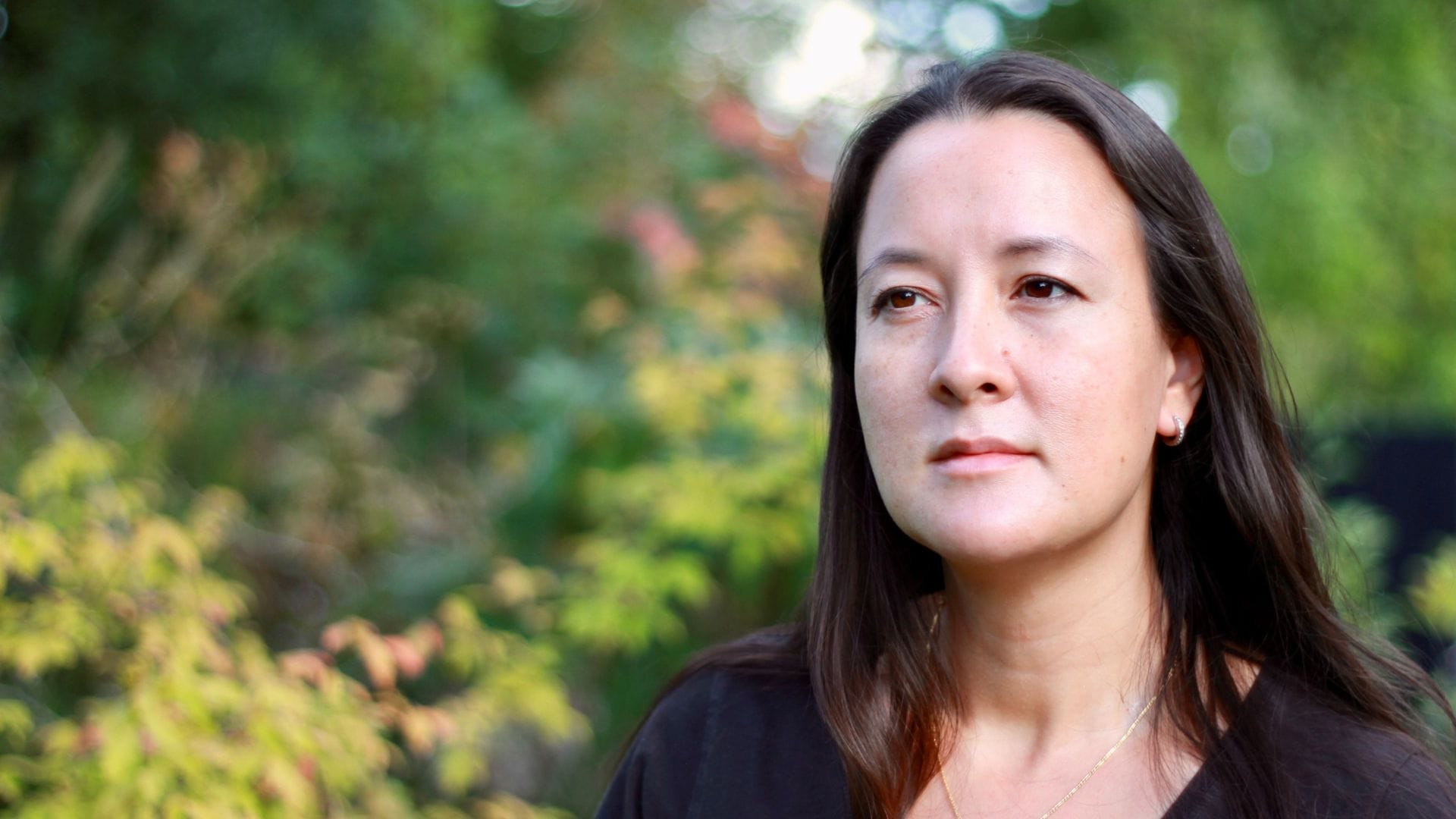
The first chapter, and perhaps the most intriguing, features Kate Valk, a member of the Wooster Group, sharing personal stories from behind the scenes, accompanied by video footage from the original production featuring Spalding Gray.
The second section brings the Wooster Group to the stage, performing the actors’ lines verbatim from the original production. For readers unfamiliar with the term, verbatim theatre is a form of documentary performance in which actors repeat the exact words and actions taken from real-life events. The company executes this faithfully using the original cast recordings. Although this segment hints at a dramatically interesting turn, the stage remains the same as in the first part and keeps truthful to the original cast performance.
The third chapter makes greater use of the stage and continues the verbatim approach with The Cocktail Party, a scene from the original show.


Nayatt School Redux is designed wonderfully, with a special mention for the sound designer, whose work truly drives the production. The set is particularly interesting, aiming to recreate the original design from 1978, complete with nearly 60-year-old records and props used in the original production.
Aesthetics aside, I found myself struggling to fully grasp the production’s intent. It feels less like a revival or a true redux and more like a tribute, a heartfelt nod to the innovative spirit of the Wooster Group. Their originality, courage and desire to break boundaries are evident, but in this instance, the production may fall a little short of making a bold new statement. Still, the courage to revisit and reflect on their origins is admirable.
The main question I am left with is: why this approach?
There was a time when leaving the theatre confused made me question my own credibility as a theatre-goer, but that is no longer the case. I must admit that when the original scenes were performed, I found them difficult to interpret.
Nayatt School Redux, rather than a traditional play or performance, felt more like a recollection, a tribute, a love letter to a company that was once groundbreaking. Perhaps, in their reverence for the past, the group hesitated to take the creative risks that once defined them.
I give Nayatt School Redux three stars not because I fully understood its purpose or followed the storyline, but because of the clear dedication of the company, the captivating storytelling of Kate Valk, whose presence alone is worth the ticket, and the enduring originality the Wooster Group has always brought to the stage.