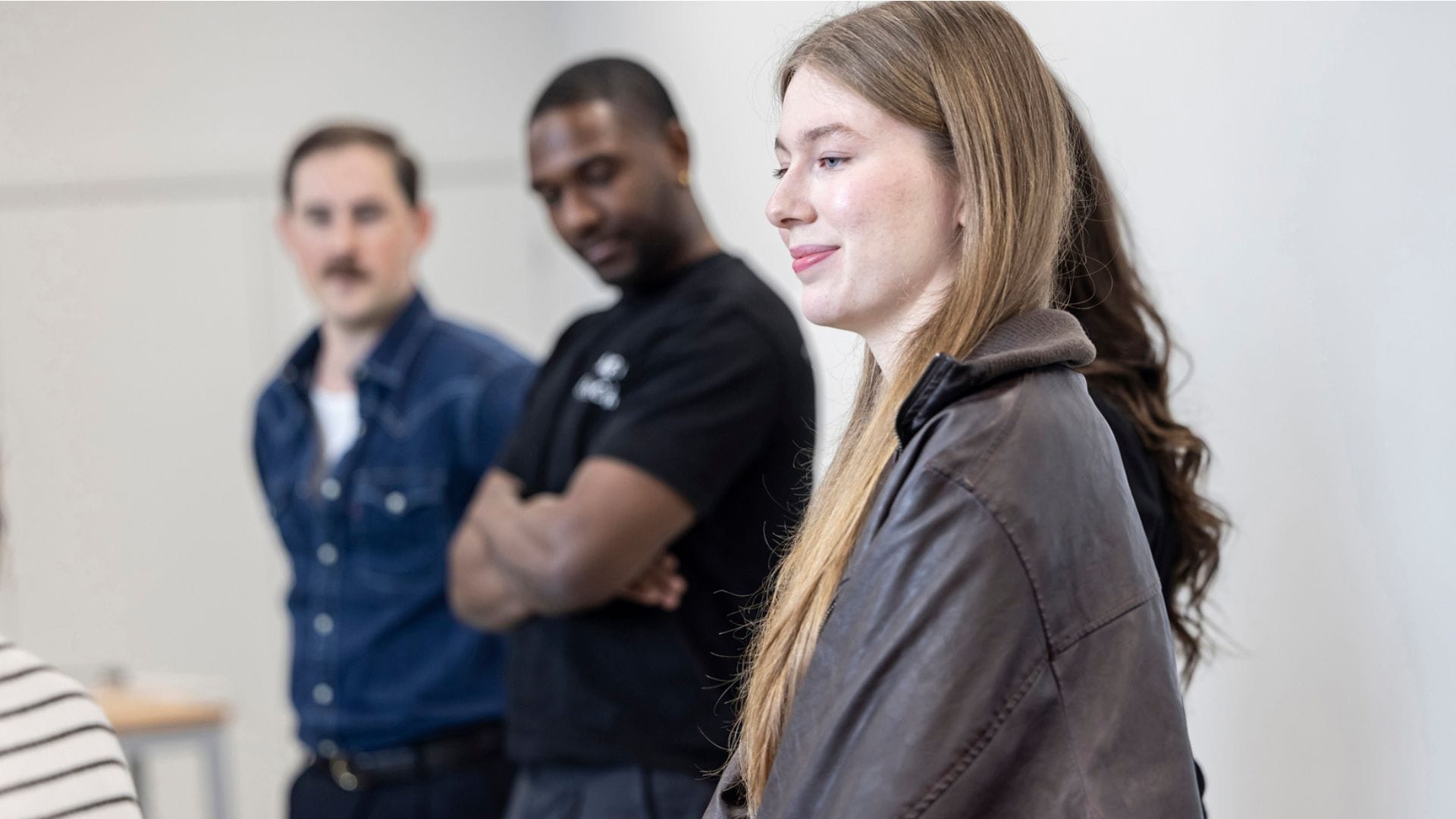


 Written and performed by Sam Morrison and directed by Amrou Al-Kadhi, Sugar Daddy attempts to turn bereavement and grief into comedy: how can we grieve? Can we laugh it off? Blending stand-up, storytelling, and bite-sized audience interaction, it traces the love story between Morrison, a Jewish gay man with “belly issues”, and his “sugar daddy” Jonathan, a “bear” 26 years older, whom Morrison once fears to date, but desperately craves to love only when he finds out he no longer can.
Having Type I diabetes, “bear” is Jonathan’s “sugar”: “my type is type I but my ‘type’ is type II.” Morrison seeks physical pleasure, searching for “belly bears” during a “bear week” in Provincetown, alongside drag shows and pizza at 2am. He shares a perfect one-night stand with Jonathan, but pulls back when Jonathan invites him for a sequential date. “I don’t even sleep with all of your friends”, he jokes. Only after Jonathan’s death during the pandemic does he start to fantasise about something different: (possibly married) life with Jonathan, safe and simple, as peaceful as the ocean waves that always soothe him.
Told by his therapist that grief may have been the cause of his diabetes, Morrison tries not just to make sense of grief but to make it sensual, like his diabetes. There are some potentially poetic moments where memories are linked with seagulls and ocean waves, but with too many back-and-forth shifts between storytelling and stand-up, the show’s overall pace and structure struggle to support the emotional depth and weighty vulnerability it is supposed to carry. Once you think you can lie back, lingering on those moments for a little while, either about the serenity of seawalls or seagulls as loyal creatures, the quick-fire comedy snaps back and awaits your readiness for more punchlines.
There is also a recurring voiceover throughout the show representing Morrison’s therapist. While it is common practice to use an amplified mic to signal authority, it remains uncertain what this design adds here: how it relates to grief, or to the ways grief is seen, heard or felt, sensed. Nor does it fully circle back to Morrison’s own comment, “what remains of trauma but un-monetised content?” Eventually, the show’s through-line becomes too chopped up, losing much of its poignancy in-between, less funny as comedy, and too moderate as a one-man play.
Listings and ticket information can be found here